Injection moulding for manufacturing & process engineering

Industries

Plastic keeps processes in motion

Manufacturing & Process Engineering
In manufacturing and process plants, engineering plastics perform central functions: they guide, slide, convey, dose, seal and protect. In doing so, they can reduce friction and moving mass, operate without external lubrication and withstand aggressive media or intensive cleaning processes. The decisive factor is to consistently match the material and component to the load, medium, temperature and production environment.
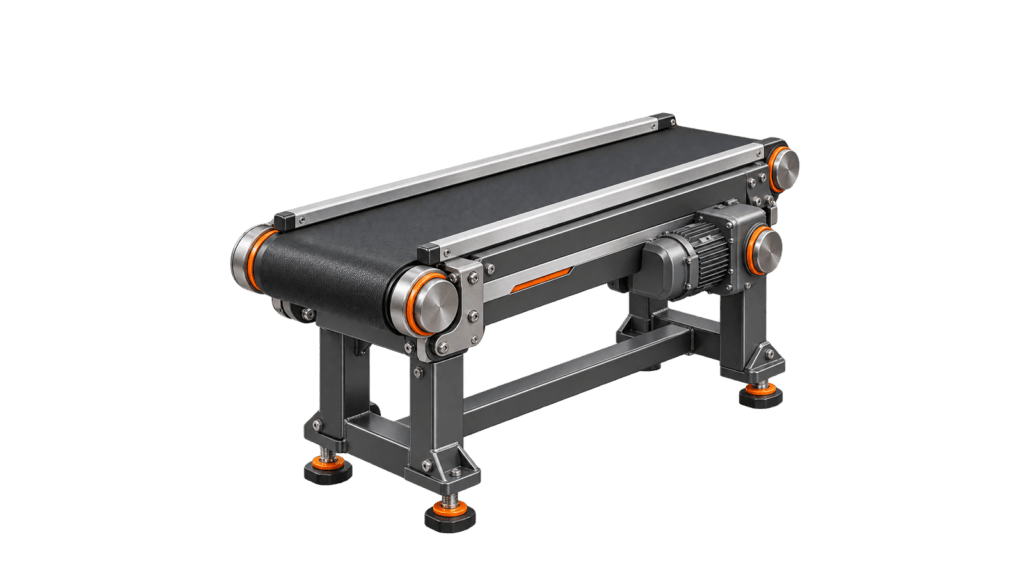
Conveyor belt as an example of plastic components in industrial production plants
up to 75%
lower coefficient of friction for a sliding-optimised material compared to standard PE-UHMW with POM as the sliding partner.
up to 80%
less weight compared to stainless steel bearing solutions.
up to 260 °C
continuous use based on the example of a PEEK type.
500 / min
products per minute in a plant with plastic guides.

When downtime is not an option

Challenges in development
Manufacturing and process plants must function precisely and reliably over long operating periods. Friction, wear, aggressive media, temperature, cleaning and changing loads act directly on every component. For components in contact with the product, hygiene, contamination protection and regulatory requirements are also factors.

Wear & continuous operation

Guides, bearings, rollers and sliding elements often work in continuous operation. Wear must not influence precision, process stability and plant availability in an uncontrolled manner.

Friction & lubrication

Friction influences drive power, heating and wear. At the same time, external lubrication may be undesirable in clean or product-related processes.

Chemicals & process media

Acids, alkalis, solvents, cleaning chemicals or process media can attack materials. Resistance must be tested for the medium, concentration and temperature.

Temperature & cleaning

Hot water, steam, cleaning processes and temperature changes place a strain on the material and geometry. Temperature and hydrolysis resistance thus become process requirements.

Precision & dimensional stability

Dosing, guiding and sealing require reproducible geometries. Creep, moisture absorption and thermal expansion must be taken into account over the actual operating life.

Hygiene & product safety

In the case of product contact, the material, surface and component geometry must allow for cleaning and minimise contamination risks. Depending on the application, additional regulatory requirements apply.

From process requirement to near-series component

With rapid tooling, aluminium moulds and injection moulding in the intended series material, real components for application-related tests are created quickly. This allows fit, movement, media contact and function to be investigated early on and design adjustments to be implemented quickly.
Check feasibility

Project communication easier than ever before

Easy collaboration
No tool constraints. No unnecessary detours. No complicated coordination processes. We communicate with you in the way that is easiest for you and your team – via Teams, WhatsApp, email or directly via procurement platforms such as SAP Ariba, JAGGAER or Cegedim. Because in the end, what matters to us is not which channel we use, but that information reaches where it is needed quickly – so that your project moves forward and you have your near-series prototype in your hands faster.

You decide how we communicate

The best communication channel? The one that works for you.
Microsoft Teams
Direct coordination with your project team.
WhatsApp
Quickly clarify a question or exchange information.
Email
For everything that should be documented in the classic way.
Partner platforms
SAP Ariba, JAGGAER, Cegedim and other established procurement systems.

The process behind it also remains simple

We don't just want to manufacture quickly. We also want to make the path to the component as uncomplicated as possible.
Fast onboarding
So that we can start together without a long lead-up phase.
Direct procurement processes
We integrate into your existing purchasing and procurement processes.
Less friction. More speed.
Clear communication and well-established processes ensure that decisions can be made faster.
Ready for a partnership without detours?
We make it as easy as possible for you to get started – in communication, in purchasing and throughout the entire project process.

Materials for processes in continuous operation

Material expertise for manufacturing & process engineering
In manufacturing and process plants, the material must match the function exactly. Friction and wear, process medium, temperature, cleaning and dimensional stability determine the selection just as much as hygiene or product contact requirements. Engineering and high-performance plastics open up a wide range of properties for this.
Black plastic granules as raw material for the production of injection moulded parts

Wear-resistant & low-friction

Controlled friction and high wear resistance support guides, bearings, rollers and conveying components in continuous operation.

Dry running & low lubrication dependency

Tribologically optimised plastics can enable sliding points without external lubrication – interesting for difficult-to-access, clean or product-related applications.

Chemical & corrosion resistance

Process media, acids, alkalis and cleaning chemicals require materials whose properties match the specific medium, concentration and temperature.

Temperature & hydrolysis resistance

High process temperatures, hot water, steam and temperature changes place special demands on mechanical properties and dimensional stability.

Dimensional accuracy & stability

Guides, dosing components and sealing surfaces must reliably maintain their geometry under temperature, moisture and continuous load.

Hygiene & detectability

In sensitive production areas, product contact, cleanability and the detection of possible foreign bodies can place additional requirements on the material.

Material examples

POM · PET · PA · PP · PVDF · PFA · PPS · PEEK · PEI · PSU/PPSU · TPE/TPU · GF/CF-reinforced and tribologically modified compounds.
Special requirements for your component?
Together we will check which material and which process suits your application in manufacturing & process engineering.

Faster to the near-series component

Why priomold
When development time, costs and informative value are crucial, you need a partner who can react quickly and flexibly. With rapid tooling, we combine short lead times with near-series injection-moulded parts – ideal for prototypes, tests and small series.

Rapid Tooling

Develop quickly and flexibly
Our aluminium moulds enable short tool lead times of between 2 and 8 weeks depending on your priority and quick adjustments during the development phase.

Prototypes from 5 days

When every week counts
For particularly urgent projects, the first injection-moulded prototypes can be realised within a week.

Near-series materials

Validate under realistic conditions
We manufacture components in the intended series material, so that function, haptics, dimensional accuracy and material behaviour can be realistically evaluated – significantly closer to the series application than with purely visual models.

FAQs on manufacturing & process engineering

FAQs
Answers on materials for wear, friction, process media, temperature and continuous operation.

For guides, bearings, rollers or sliding elements, friction and wear are central selection criteria. In addition, load, speed, counter-rotating partners, temperature and the respective operating environment must be taken into account.

Yes. Tribologically optimised plastics can enable sliding points without external lubrication in suitable applications. However, whether dry running is advisable depends on the load, speed, counter-rotating partner, temperature and geometry.

Yes. We always consider resistance in connection with the specific process medium. Factors such as concentration, temperature, exposure time and mechanical load play a role. Based on this, suitable materials for prototypes and near-series tests can be selected.

Depending on the temperature and load, various engineering and high-performance plastics are available. In addition to continuous and peak temperatures, mechanical load, process media and, if applicable, cleaning processes must also be taken into account.

We consider the material and component geometry together. Manufacturing tolerances, thermal expansion, moisture absorption, creep behaviour and continuous load can influence the subsequent function. That is why we check critical areas for their feasibility for injection moulding even before the tool is built.

The most helpful are 3D data or drawings as well as information on function, load, temperature, movement, process media and the desired quantity. On this basis, we can evaluate the material, component geometry and tool concept and support you in the design suitable for injection moulding.

Still haven't found the right answer?
Just write to us – we're happy to help!
Freigestelltes Porträt von Tobias Camek, Leiter Kundenmanagement bei priomold
Any more questions about your process application?
Tobias will be happy to help you if you have questions about the material, medium, load or the technical implementation of your component.
Tobias Camek
Head of Customer Management
Contact Tobias

Or write to Tobias at t.camek@priomold.de

Fast response
Personal contact
Clear, direct answers